Saturday, February 25, 2012

STUC PIERRE


Private house in Rua do Heroísmo, Porto

Wednesday, February 22, 2012

STUCCO CEILING


The beautiful ceiling of our office in Rua do Almada, Porto.

Monday, February 20, 2012

ALFÂNDEGA DO PORTO


Part of the customs house in Porto with its massive cast iron doors and slender temple of the winds columns. The beam is a real I-Beam made of riveted metal plates. This would predate Post-Modernism by more than a century - except here, the scale is right. Tracks on the floor enabled carts to go around with the goods to be inspected or securely stored.

Saturday, February 18, 2012

EVEN OLDER MONEY


The lost craft of designing paper money.

Monday, February 13, 2012

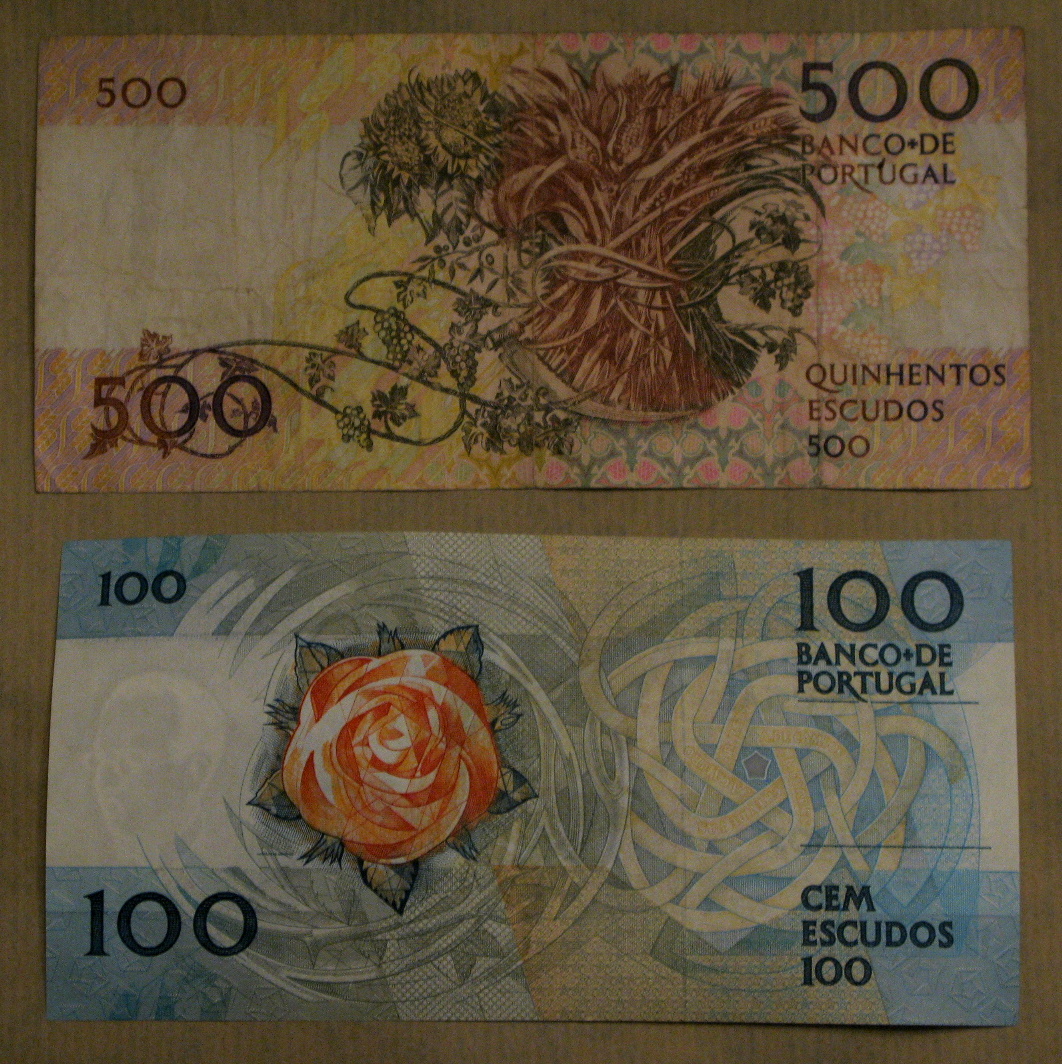
OLD MONEY


Whether you agree with the single currency or not, or believe in the Euro implosion based on mountains of debt and speculation, the moral conundrums of a transfer economy, etc etc there is no question the old money was incredibly richer (visually, alas) than the new. These were the last bills to be issued before the Euro came, in 1999.

Saturday, February 11, 2012

ROMANTIC GARDEN

Near Palacio do Freixo, in Porto, we can visit one of the first romantic gardens in the city - the Quinta de Villar d'Allen, from the early 19t century. Although it's still in private property, the current owner, third generation from João d'Allen, will kindly open its doors to all visitors who are interested not only in seeing one of the most exotic gardens in Porto but also their world class camellia grove and nursery. In the photos above we can see the main facade with the french garden in front and a view from the garden, showing a flaming urn designed by the italian architect Nicolau Nasoni.

Thursday, February 9, 2012

PORT WINE


very, very old port wine....

Quinta Villar d'Allen, Porto

Wednesday, February 8, 2012

STONE PAVEMENT DESIGN


Quinta de Villar d'Allen, Porto

Monday, February 6, 2012

BARROCAS


As the weather triumphs over the limestone, the Cross triumphs over the Dice in the church of Barrocas, Aveiro. Maybe there is some other meaning to the number on the faces of the die. But who knows, and who cares - this is as glorious a window as can be.

Friday, February 3, 2012

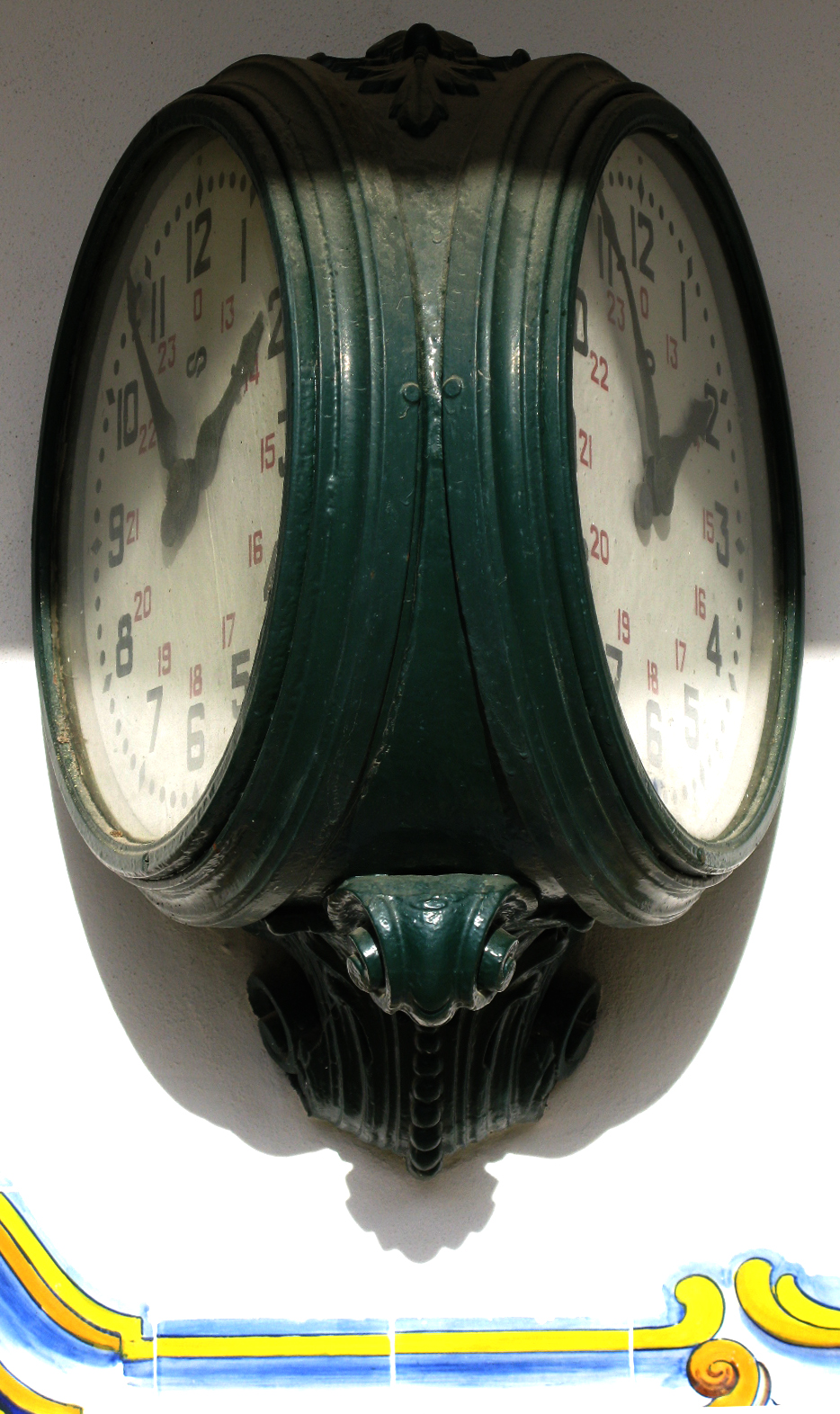
TRAIN STATION CLOCK


Pinhão Train Station.
All of Portugal's train stations were, at a time, designed in the same style with the same materials, and few regional variations. Tiles were used profusely which depicted local scenes, monuments, landscapes. A Portuguese train station was easily identified as a building type.
We don't know if this wonderful clock was as ubiquitous as the painted tiles on the walls, but its design has both a modern dial and a beaux-arts body. This softness of style, both traditional and functionalist, is not unlike the mix which makes most old Portuguese stuff.
Monday, January 30, 2012

LINHARES DA BEIRA


Linhares da Beira, Guarda

The old Castle is a minimalist composition of walls and turrets, laid on top of a raw stone mass that overlooks Spain and protects the charming village around. Recent "improvements" have scarred its entry and passages, but from afar the granitic mass is still imposing in its exactitude. The hills around are used as a major paragliding spot.

Wednesday, January 25, 2012

STONE STEREOTOMY


Still in Peso da Régua, a fine detail of stereotomy in stone.
Private House, Peso da Régua

Tuesday, January 24, 2012

HAND PAINTED EXTERIOR WALL TILES


Private house, Peso da Régua

Monday, January 23, 2012

LIME PLASTER PAINTED ROOF


Quinta da Pacheca, Peso da Régua

Friday, January 20, 2012

WOOD AND METAL HOOK


Private House, Covas do Douro

Wednesday, January 18, 2012

BRASS PLUMB WEIGHT NO. 6


This is the last one, bought in a regular hardware store in Guarda. All other places are out. The top pin unscrews to open up the inside, filled with swarf.

Tuesday, January 17, 2012

STONE BRACKET


Private house in Passeio das Virtudes, Porto

Monday, January 16, 2012

ELECTRIC WIRING

Porto. Everytime you visit an old abandoned townhouse the electrical installation is similar: twisted silk wires and outward mounted bakelite switches (see bakelite, here) with ceramic fasteners holding the whole thing to the walls, casings, ceilings. When you can't conceal the little functional things, they have to be made beautiful.

Friday, January 13, 2012

BLACK AND WHITE DOME


View of the dome at Casa da Ínsua 18th century chapel.

Casa da Ínsua, Penalva do Castelo

Wednesday, January 11, 2012

MINCHIN - MADE IN PORTO


We tried to know more about the brand of this beautiful radiator with an integrated plate warmer, but still with no results. This heater, made in Porto, is apparently from the XIX century and was part of the central heating system at Casa da Ínsua. Out of curiosity, the heating system at this house was made with hot olive oil and grappa.

Tuesday, January 10, 2012

JEREMIE GIROD À PORTO


The amazing mechanism of the watch by Jeremie Girod at the Church of Casa da Ínsua.

Casa da Ínsua, Penalva do Castelo

Friday, January 6, 2012

PINHÃO, STEAM TRAIN

At the time of writing, this train still works as a tourism line. More information here.

Thursday, January 5, 2012

CASA DA ÍNSUA


The Grand Salon.
This was preceded by the "Chinese Room" and the "Hall of Portraits", symbols of living in another era. Although the house dates from the 18th century, the main public rooms were decorated in the late 19th-early 20th centuries. The photo was taken a few days ago, but it could have easily been part of "Palm Beach Houses" or "Beaux-Arts Mansions". Nicola Bigaglia was responsible for the decoration.

Wednesday, January 4, 2012

CASA DA ÍNSUA


Stone rail, detail at main entrance

Tuesday, January 3, 2012

CASA DA ÍNSUA


We start 2012 with a visit to Casa da Ínsua, an 18th century house recently converted to a 5 star hotel. Located near Viseu, in the small village of Penalva do Castelo, it is definitely worth a visit. Casa da Ínsua, also known as Solar dos Albuquerques, was built in the second half of the 18th century by Luís de Albuquerque de Melo Pereira Cáceres, governor of Portugal in the State of Cuibá and Mato Grosso in Brasil. To learn more about the history of the house you can visit their website here.

Saturday, December 24, 2011

CHRISTMAS EVE 2011 EDITION - MAKING BREAD


A number of Portuguese households have wood-fired ovens built in. Making bread at home is something which obviously came out of necessity, but today simply yields the most delicious mouthwatering bread immagineable. The loaves come out piping hot and crunchy, and are delicious with a little salted butter. They keep their freshness for days, contrary to bread out of even the finest bakeries. The ingredients are basic: water, wheat flour, salt and leaven, mixed entirely by hand, pounded by strong arms for about 20 minutes. The result is close to perfection.
Merry Christmas!

Friday, December 16, 2011

Thursday, December 15, 2011

Tuesday, December 13, 2011

"BURIED IN BLACK AND WHITE"


The January issue of the magazine World of Interiors presents an article by Marie-France Boyer with photos by Eric Morin, about the crypts of São Francisco Monastery,  in Porto.